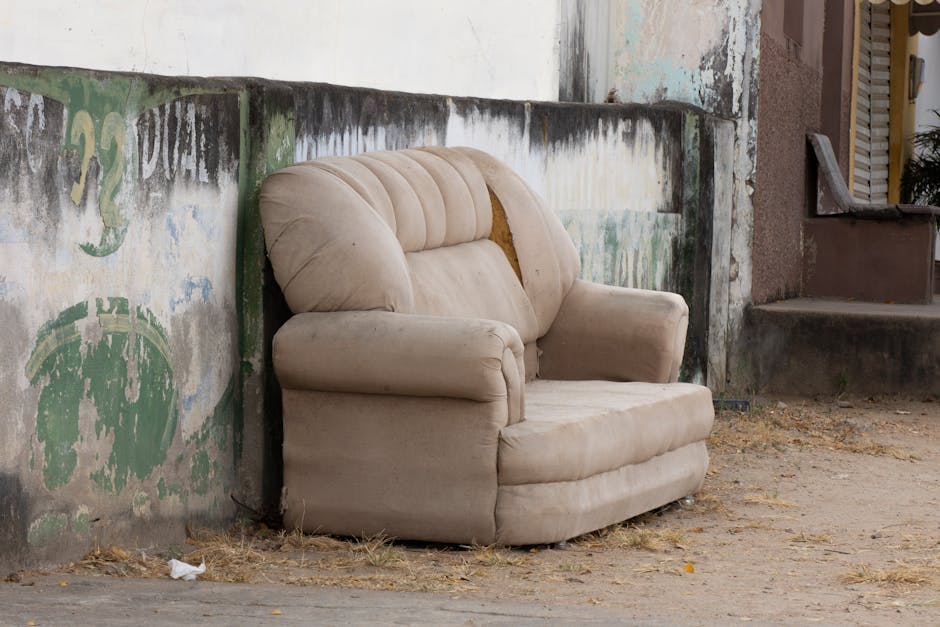
Sofa Removal Options When Bins Won't Take It in SE6
If you have a sofa blocking the hall, leaning awkwardly in the spare room, or sitting outside because the bin crew won't take it, you're not alone. Large upholstered furniture is one of those everyday problems that feels simple until you try to get rid of it. In SE6, the right sofa removal option depends on the size of the item, how quickly it needs to go, and whether you want the easiest route or the cheapest one. This guide breaks down the practical choices, what usually works best, and the mistakes that can turn a straightforward job into a headache. To be fair, a sofa sounds harmless until you have to move it down a narrow terrace staircase.
Below, you'll find a clear breakdown of sofa disposal and removal options, local considerations, what to expect from each method, and how to choose the most sensible next step. If you want a broader look at household clearance services, you may also find house clearance support and furniture removal options useful as part of your decision-making.
Table of Contents
- Why Sofa Removal Options When Bins Won't Take It in SE6 Matters
- How Sofa Removal Options When Bins Won't Take It in SE6 Works
- Key Benefits and Practical Advantages
- Who This Is For and When It Makes Sense
- Step-by-Step Guidance
- Expert Tips for Better Results
- Common Mistakes to Avoid
- Tools, Resources and Recommendations
- Law, Compliance, Standards, or Best Practice
- Options, Methods, or Comparison Table
- Case Study or Real-World Example
- Practical Checklist
- Conclusion
- Frequently Asked Questions
Why Sofa Removal Options When Bins Won't Take It in SE6 Matters
When a sofa reaches the end of its life, the main problem is not just getting it out of the property. It's getting it removed in a way that is legal, practical, and suited to the space you live in. In SE6, that matters because homes vary so much: maisonettes with tight access, garden flats with shared paths, older terraces with narrow entries, and busy streets where leaving bulky waste out is not a great idea unless it has been arranged properly.
Bins are not designed for a three-seater sofa, and most local collection services treat upholstered furniture as a bulky item rather than ordinary household waste. That means you need a different route. The right choice can save time, protect you from fines or fly-tipping problems, and spare you the slightly ridiculous task of trying to break a sofa apart with the wrong tools on a wet Tuesday evening. Happens more often than you'd think.
There's also the material question. Modern sofas can contain wood, metal springs, foam, fabrics, and sometimes fire-retardant components. Because of that mixed construction, disposal has to be handled carefully. One option may be cheaper, another may be quicker, and another may be better if you want the sofa reused rather than thrown away. The point is not just removal. It's choosing the right removal path for the item you actually have.
If you are planning a bigger clear-out, it may also help to look at general rubbish removal services or bulky waste collection so you can compare what fits your situation best.
How Sofa Removal Options When Bins Won't Take It in SE6 Works
In plain English, sofa removal usually follows one of a few routes: local bulky waste collection, private waste removal, donation or resale, council-supported collection, or a dismantle-and-dispose approach if the sofa can be broken down safely. The best route depends on condition, access, urgency, and how much effort you want to put in.
Here is the basic logic. If the sofa is still in decent condition, you may be able to donate or sell it. If it is damaged but manageable, a private collection or bulky waste service may suit you. If it is badly broken, stained, infested, or simply impossible to move in one piece, the removal method may need to include dismantling or special handling. Not glamorous. Very practical.
In SE6, many people end up choosing a collection service because it removes several problems at once: lifting, transport, loading, and disposal. That said, not every job needs a full-service solution. Some people only need help moving the item to the kerb. Others want the sofa removed from an upstairs room, taken away quickly, and dealt with responsibly without having to book a van, borrow tools, or ask three friends to help.
Where access is awkward, the method matters even more. A sofa that fits through the front door may still get stuck on the staircase bend. A modular sofa may come apart easily. A recliner could have heavy internal metal parts. This is why a quick look at the item before choosing an option can save a lot of trouble later.
Key Benefits and Practical Advantages
Choosing the right removal option is not just about convenience. It can improve the whole experience in small but meaningful ways.
- Saves physical strain: sofas are bulky, heavy, and awkward to grip.
- Reduces risk of damage: walls, door frames, stair rails, and floors are easier to protect when the job is planned properly.
- Helps avoid disposal issues: using the right route lowers the chance of improper dumping or missed collection rules.
- Creates space quickly: ideal if you're replacing a sofa, moving out, or preparing a rental property.
- Can support reuse: if the sofa is usable, donation or resale keeps it in circulation.
- Makes the job simpler for busy households: useful for families, landlords, and anyone with limited time or mobility.
One of the biggest benefits, truth be told, is peace of mind. You know where the sofa is going, when it is leaving, and who is handling it. That takes a decent amount of stress out of a job that can otherwise hang around for days. And once it's gone, the room feels bigger almost immediately. You notice the light more. The silence too.
If your removal is part of a larger clear-up, a linked service like end of tenancy clearance may also be worth considering, especially when a move-out deadline is creeping closer.
Who This Is For and When It Makes Sense
This type of sofa removal is for anyone who has a bulky item that ordinary waste services will not take. That includes tenants, homeowners, landlords, letting agents, estate managers, and people helping relatives downsize.
It especially makes sense if:
- the sofa is too large for normal bin collection
- the item is too heavy or awkward to carry safely
- the sofa is broken or no longer wanted
- you need it gone quickly before a delivery, move, or inspection
- you have limited access, such as stairs, tight hallways, or shared entrances
- you want a legal, tidy, and low-stress solution
It can also be the right choice if you are dealing with a property clearance and the sofa is only one item among many. In that case, it often makes sense to group the removal with other bulky items rather than tackling each piece separately. A few cushions, a coffee table, an old mattress, and suddenly the job has grown arms and legs.
For people who are comfortable lifting, have the right vehicle, and can take the sofa to an approved disposal point, self-removal may work. But if you're already asking, "Is there a simpler way?", the answer is usually yes.
Step-by-Step Guidance
Here's a practical way to approach sofa removal without overcomplicating it.
1. Check the sofa's condition
Start with a quick honest look. Is it clean enough to donate? Is the frame solid? Are the cushions intact? If the sofa still has useful life in it, reuse may be the best path. If it is torn, sagging, wet, or infested, disposal is usually the safer choice.
2. Measure access and size
Measure the sofa and note any tight corners, stairs, lifts, garden gates, or shared hallways. This is the bit people often skip. Then they discover, at the exact wrong moment, that a sofa which looked manageable in the lounge is a nightmare on the landing.
3. Decide whether you want reuse, collection, or disposal
Ask yourself a simple question: do you want the sofa rehomed, or do you just want it gone? If you want it reused, donation or resale may be suitable. If you want it removed quickly, a collection service may be the better fit.
4. Choose the safest handling method
If the sofa can be carried intact, great. If not, it may need dismantling. Removing legs, cushions, and loose sections can make a big difference. Just take care around staples, springs, and hidden fixings. They can be sharp in ways you do not expect.
5. Book or arrange the collection
Depending on the option you choose, arrange a bulky waste pickup, donation collection, private removal, or disposal run. Be clear about the item type, size, and access. A few accurate details upfront can prevent delays later.
6. Prepare the property
Clear a path to the door, protect floors if needed, and remove anything fragile nearby. If the sofa is going upstairs, let the route breathe a little. Even a small bit of space makes the process smoother.
7. Confirm where it is going
Make sure the sofa is headed to a legitimate destination. Responsible removal should not feel vague. You should know whether it is being reused, recycled, or disposed of through the proper route.
For larger clearances, it is often smart to combine this with flat clearance support or garage clearance services if you already have extra clutter waiting to be dealt with.
Expert Tips for Better Results
A few small choices can make sofa removal a lot easier than it first appears.
- Remove detachable parts first: cushions, feet, covers, and loose storage sections can reduce weight and bulk.
- Use two-person lifts where possible: sofas twist in awkward ways, especially on stairs.
- Protect the route: an old sheet, cardboard, or moving blanket can help protect paintwork and flooring.
- Plan the exit before lifting: sounds obvious, but people often pick up the sofa before they've actually decided which angle works best.
- Check if the sofa can be reused: even if you don't want it, someone else might.
- Take photos before collection: useful for your records if you are a landlord, agent, or managing a move-out.
If the sofa is particularly large, turning it on its side may help with door frames, though you should only do this if it is safe and stable. A slightly clumsy moment on the stairs is not worth a strained back. People underestimate that one all the time.
Also, don't wait until the day of a move to find out the sofa won't fit through the front door. That is a very common story, and not a fun one.
Common Mistakes to Avoid
Most sofa disposal problems come from rushing. The sofa itself is not the problem; the planning is.
- Leaving it outside without arrangement: this can create complaints, obstruction issues, or collection problems.
- Assuming the bin crew will take it: standard bin services usually do not handle full-sized sofas.
- Underestimating the weight: some sofas are far heavier than they look.
- Forcing it through a tight doorway: this can damage both the sofa and the property.
- Not checking disposal destination: you want reassurance that it's being handled properly.
- Ignoring contamination or damage: wet, mouldy, or infested furniture needs more careful handling.
One small but important mistake is forgetting about the people around you. In a block of flats, for example, you may need to think about neighbours, shared access, and timing. Early morning is not always the best time to drag a bulky item down a communal stairwell. The noise carries. So does the mood, sometimes.
Tools, Resources and Recommendations
You do not need a workshop full of equipment, but a few basic tools can make the process far easier.
| Tool / Resource | What it helps with | Best used for |
|---|---|---|
| Work gloves | Grip and hand protection | Handling rough fabric, staples, or broken frames |
| Moving straps | Safer lifting | Stairs and narrow hallways |
| Blankets or floor protection | Protecting paint and flooring | Protective movement through the property |
| Basic screwdriver or hex key | Removing sofa legs or sections | Modular or dismantlable sofas |
| Storage bags for screws | Keeping fixings together | If the sofa is being moved, sold, or recycled in parts |
In terms of recommendations, keep your approach simple. If the sofa is reusable and you have time, prioritise reuse. If it's not reusable but is accessible, a bulky collection or private removal route usually makes sense. If it is awkward, damaged, or part of a bigger clear-out, use a service that handles collection and disposal together.
You may also find same-day clearance options useful if time is tight, especially when a new sofa is arriving and the old one has to be out of the way before the delivery slot lands.
Law, Compliance, Standards, or Best Practice
When disposing of a sofa in the UK, the main concern is making sure it is handled responsibly and not left for others to deal with. You do not need to become an expert in waste policy, but you should stick to sensible best practice.
In practical terms, that means:
- using an arranged collection or an approved disposal route
- avoiding fly-tipping or leaving items on public land without permission
- checking whether the item should be treated as bulky waste rather than ordinary rubbish
- making sure any contractor you use is carrying out lawful disposal
- being careful with upholstered furniture that may be dirty, damp, or infested
If you are a landlord, letting agent, or managing a property turn-over, it is wise to keep records of what was removed and when. That helps with accountability and can save arguments later. Nothing dramatic, just sensible admin, which is often the difference between a smooth clearance and a messy one.
Best practice also includes checking access and making sure no one gets hurt during lifting. A sofa can look harmless and still pinch fingers, scrape walls, or wobble unexpectedly. Good handling matters. Always.
Options, Methods, or Comparison Table
There is no single perfect method for every household. The right choice depends on condition, speed, and how much work you want to do yourself. Here's a simple comparison to help you weigh it up.
| Option | Best for | Pros | Watch out for |
|---|---|---|---|
| Donation / reuse | Clean, usable sofas | Eco-friendly, may help others, often lower waste impact | Must meet condition requirements; collection may not be immediate |
| Private sofa removal | Quick, hassle-free removal | Convenient, can include lifting and loading | Cost varies; check disposal responsibility |
| Bulky waste collection | Large household items | Simple if booked correctly, suited to one-off items | May have booking rules and timing limits |
| Self-removal | People with transport and help | Control over timing, potentially cheaper | Heavy lifting, access issues, disposal point requirements |
| Dismantling first | Awkward or oversized sofas | Makes moving easier, helps with tight spaces | Takes time, tools needed, risk of damage if rushed |
For many people in SE6, the most efficient choice is the one that removes stress, not just the sofa. A cheap option that turns into a half-day project is rarely cheap in real life, let's face it.
Case Study or Real-World Example
A common SE6 scenario looks like this: a family upgrades their living room set, but the old sofa is too large to leave in the flat and too worn to donate. The building has a narrow stairwell, the delivery for the new sofa is booked for Friday afternoon, and the old one has to go before then.
In that situation, the most sensible route is usually a collection service that can lift, carry, and remove the item on the same day or at a pre-booked time. If the sofa is modular, the team may take off legs or separate sections first. If the access route is tight, they may use padding and careful angles to avoid scraping the stair rail or wall corners.
What makes this kind of job go well is not luck. It is preparation. The customer measures the sofa, clears the hallway, and knows in advance that the item is not reusable. The removal team arrives ready to load, and the whole process is done without the frantic last-minute scramble that so often happens when furniture arrives before furniture leaves.
That said, every property is different. A ground-floor flat with direct access is a simpler job than a top-floor maisonette with a narrow landing and a squeaky door frame. Same sofa, very different removal experience. Context matters more than people expect.
Practical Checklist
Use this quick checklist before arranging sofa removal in SE6.
- Confirm whether the sofa is reusable, repairable, or disposal-only
- Measure the sofa and note the access route
- Decide whether you need lifting help
- Clear the path from room to exit
- Remove cushions, feet, and loose parts if possible
- Check whether the sofa needs to be dismantled
- Choose a legitimate removal or disposal route
- Keep any booking details or confirmation messages
- Make sure neighbours or building managers are aware if shared access is involved
- Take photos if you need a record for tenancy or property management
Expert summary: the best sofa removal option is the one that matches the sofa's condition, your access constraints, and your schedule. If it's usable, reuse may be ideal. If it's bulky and awkward, a proper removal service is usually the least stressful answer. And if you're in a hurry, do not leave it to chance. The smoothest jobs are the ones that are planned with a calm head.
Conclusion
When bins won't take a sofa in SE6, you still have several solid options. The key is to choose the one that fits your situation rather than guessing and hoping for the best. A reusable sofa may deserve donation or resale. A damaged one may need bulky waste collection or a private removal service. A tricky layout may call for dismantling, protective handling, and a team that knows how to move furniture without turning your hallway into a battleground.
The good news is that this is rarely a mystery once you look at the item clearly. Measure it, assess its condition, think about access, and pick the route that saves time, stress, and unnecessary lifting. That small bit of planning goes a long way. Really, it does.
If you are weighing up the easiest next step, compare your removal options early so you are not left dealing with a heavy sofa at the exact moment you need the room clear.
Get a free quote today and see how much you can save.
Frequently Asked Questions
What should I do if the bins won't take my sofa in SE6?
Use a dedicated bulky waste or furniture removal route instead of trying to force it into standard bin collection. If the sofa is usable, donation or resale may be possible. If not, arrange proper disposal through a suitable service.
Can I leave my sofa on the pavement for collection?
Only if it has been properly arranged and placed out in accordance with the collection rules you were given. Leaving it out without permission can cause problems, especially in shared streets or blocks.
Is sofa removal usually cheaper than hiring a van myself?
Not always. Self-removal can seem cheaper, but you need transport, fuel, lifting help, and time. A professional removal service may cost more upfront but can be better value once you count the effort and risk.
Can a sofa be donated if it is old but still usable?
Yes, sometimes. The sofa usually needs to be clean, structurally sound, and in a condition suitable for reuse. If it is stained, badly worn, or damaged, donation is less likely to be accepted.
What if the sofa will not fit through the door?
Try removing legs, cushions, or detachable sections first. If that still does not work, the sofa may need to be dismantled or moved by people experienced in awkward removals.
Do I need to be home for sofa collection?
Often yes, especially if access needs to be arranged from inside the property. Some services can collect from an agreed outside location, but it depends on the setup and the level of access required.
How long does sofa removal usually take?
That depends on access, size, and whether the item needs dismantling. A simple ground-floor removal can be quick, while an upstairs or awkwardly placed sofa may take noticeably longer.
What happens to the sofa after removal?
That depends on its condition and the service used. A usable sofa may be reused or donated. A damaged one may be taken for appropriate disposal or recycling where possible.
Can I remove a sofa myself safely?
Yes, if you have the right help, vehicle, and equipment. But sofas are heavier and more awkward than they look, so it is worth being realistic about the risks before attempting it solo.
Is it okay to cut up a sofa for disposal?
Sometimes dismantling helps, but it should be done carefully. Springs, staples, and hidden fixings can cause injuries, and the materials still need to be disposed of properly.
What if I need the sofa gone urgently?
A same-day or short-notice collection may be the most practical option. If you are on a deadline, say so upfront and give accurate details about size and access so there are no surprises.
How do I know if a removal service is handling it properly?
Ask clear questions about collection, transport, and disposal. A trustworthy service should be able to explain where the item is going and how it will be handled, without being vague about the process.
If you are still deciding between reuse, collection, or full clearance, start with the option that makes the space safe and usable again. That first clear step often solves more than you expect, and it feels good when the room is finally empty.